
Choosing the Right Material for 3D Printing
- Nida Fawwazah
- Apr 14
- 3 min read

Updated: Aug 6
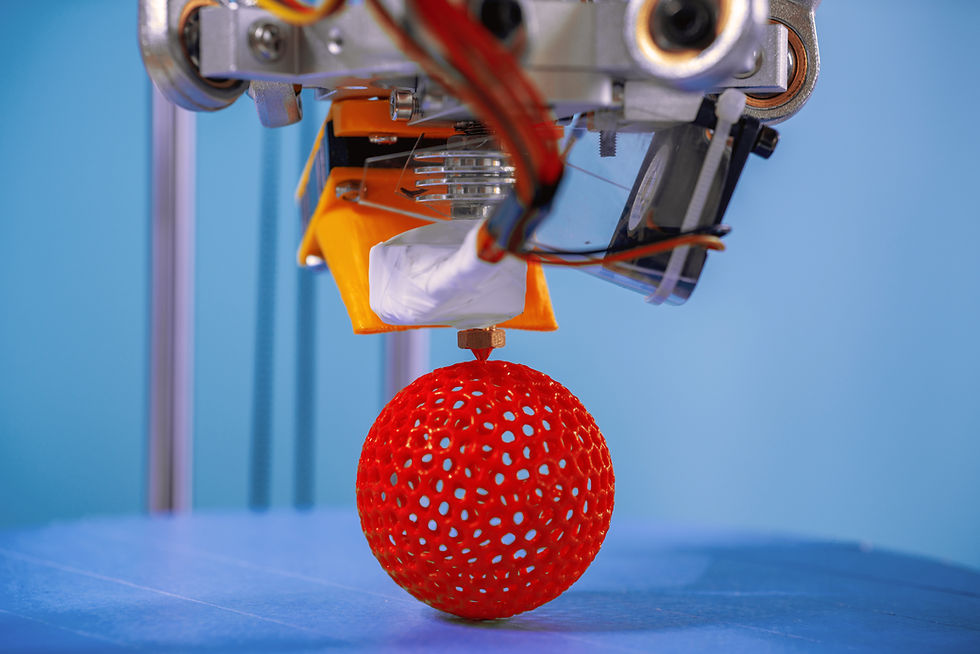
3D printing has opened up unlimited possibilities for designer, retail owner, and creators. But the success of the result depends on choosing the right materials. Each material has its own characteristic, it offers different strength, finishing look and durability, making it important to choose the right material based on your purposes.
PLA (Polylatic Acid)
If you uncertain about what you should choose, the safest choice is PLA (Polylatic Acid) since its beginner friendly and often used for general purposes. It easy to print, affordable, and produces smooth, visually appealing results. Made from renewable resources like corn starch, it’s biodegradable and easy to print with. This material is the best choices for prototyping, decorative objects, and packaging mockups. However, this material is not very heat resistant and can be fragile, so it's less suitable for functional usage or outdoor use.
PETG (Polyethylene Terephthalate Glycol)
If you need something stronger and more flexible, you can consider PETG (Polyethylene Terephthalate Glycol). This material offers balance between durability and flexibility while being resistant to water and chemicals compared to PLA. PETG works best for functional prototypes, containers, and products that need more durability without sacrificing ease of printing.
TPU (Thermoplastic Polyurethane)
TPU is a flexible, rubber-like material. Unlike rigid filaments, TPU can bend, stretch, and absorb impact. It’s commonly used for items like phone cases, gaskets, seals, and wearable parts. However, TPU can be trickier to print due to its flexibility, requiring slower speeds and careful setup.
PC (Polycarbonate)
Polycarbonate is a high-strength engineering material known for its toughness and heat resistance.
It’s used in demanding applications such as mechanical parts, protective components, and enclosures. While very durable, PC requires higher printing temperatures and controlled environments, making it more suitable for advanced users.
PA6 (Polyamide 6 / Nylon 6)
PA6, commonly known as Nylon 6, is a strong and wear-resistant material with slight flexibility.
It’s widely used for gears, hinges, and mechanical components that experience friction. PA6 is durable but tends to absorb moisture from the air, which can affect print quality if not stored properly.
PPA (Polyphthalamide)
PPA is a high-performance nylon that offers better heat and chemical resistance than standard nylons like PA6.
This material is designed for demanding environments where parts must maintain strength under high temperatures or exposure to chemicals. It’s commonly used in automotive and industrial applications.
PPS (Polyphenylene Sulfide)
PPS is one of the most advanced materials available in 3D printing. It offers exceptional resistance to heat, chemicals, and mechanical stress.
PPS is typically used in aerospace, automotive, and industrial sectors where extreme performance is required. However, it demands specialized printers and controlled conditions, making it less accessible for everyday use.
Selecting the right material depends on your project’s purpose:
For beginners or visual models → PLA
For everyday functional parts → PETG
For flexible designs → TPU
For strong, heat-resistant parts → PC
For mechanical and wear-resistant parts → PA6
For high-performance engineering needs → PPA
For extreme industrial applications → PPS
However, the “right” material depends on the goal of your project. Whether you prioritize ease, durability, flexibility, or detail, understanding these material characteristics helps ensure your 3D prints are not only visually appealing but also functional and reliable.
If you’re still unsure which material best fits your needs, don’t worry—choosing the right option can be tricky at first. Feel free to reach out to us for a consultation, and we’ll help guide you toward the most suitable material based on your project, budget, and desired outcome.


Comments